
About Me
Hi!
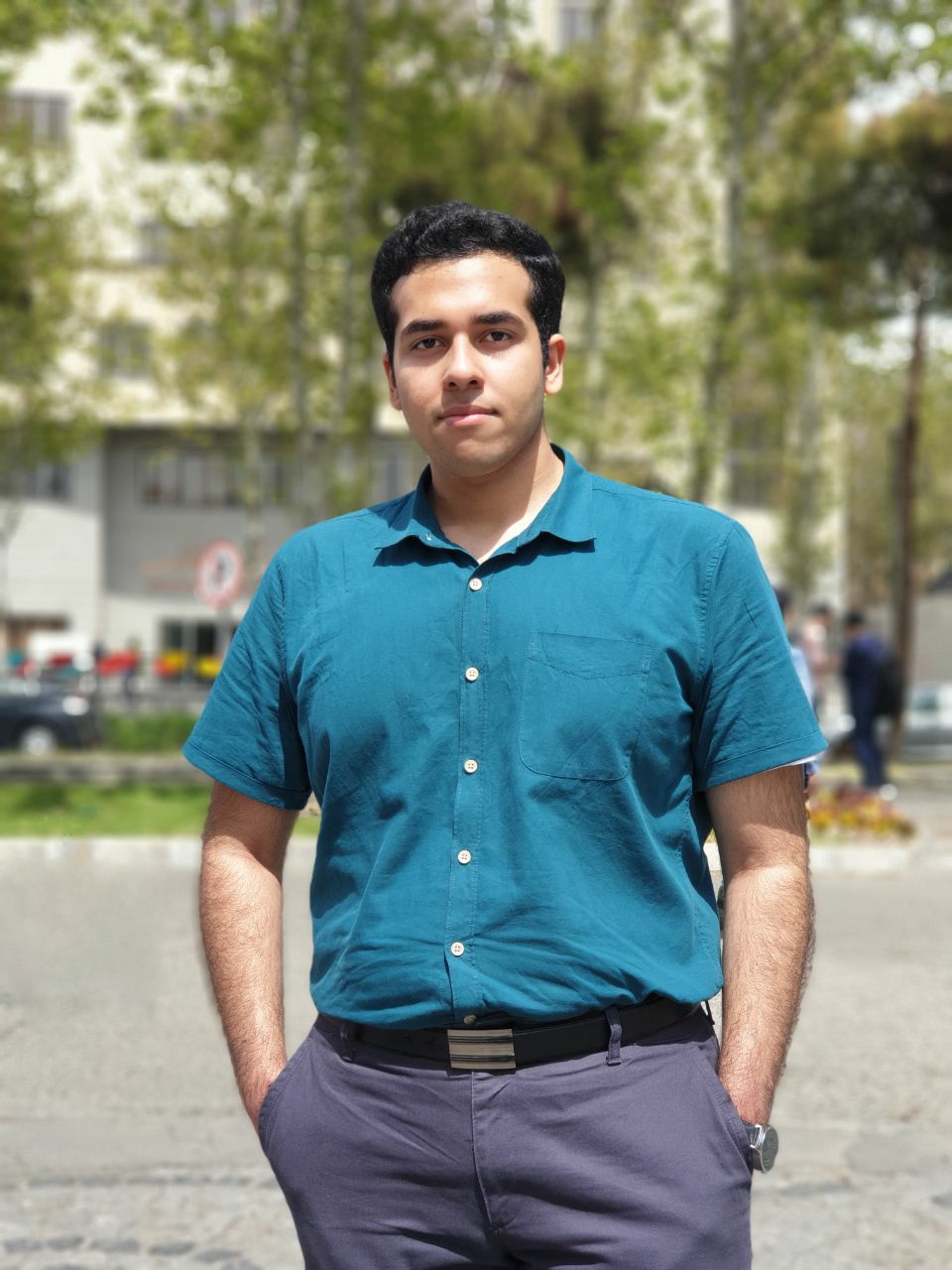
I’m Ali Ahmadi, a mechanical engineer with an M.Sc. from the University of Tehran. My main research interests include control and dynamical systems, robotics and mechatronics, haptics, autonomous systems, and human–robot interaction. I’m also interested in projects involving clean and renewable energy systems, as well as the application of artificial intelligence and neural networks to engineering problems. Currently, I serve as a research assistant and lab coordinator at the Intelligent Systems and Control Laboratory and the VINS Laboratory.
My Research and Academic Journey
My master’s thesis focused on developing a robotic exercise device capable of adjusting and controlling the interaction force with the user. The goal of the project was to control the force generated in a selected muscle of the human upper limb during exercise and rehabilitation movements. To achieve this, I combined methods from control systems, biomechanics, neural networks, and machine vision. To achieve this, I designed a machine vision framework that tracks the user’s arm posture using stereo cameras and neural networks for pose estimation and re-identification. This approach eliminates the need for marker-based motion capture, making the system easy to use in gyms, clinics, and home settings. A real-time musculoskeletal model was also developed to estimate muscle forces, running at 12 milliseconds per step and adaptable to individual users. A proportional–integral (PI) controller was used in the control loop, allowing precise control of the target muscle force within a 4.6% error range, with only 6.5% overshoot and a settling time under 300 milliseconds.
I have always been interested in academic activities and teaching; therefore, I served as a teaching assistant for several courses, including Statics, Dynamics, the Dynamics and Vibrations Laboratory, and Heat Transfer.
During my bachelor’s program, I joined the “Persian Gazelle Solar Electric Car Center,” where I also completed my bachelor’s thesis. My bachelor’s thesis focused on designing energy-harvesting shock absorbers for the Gazelle 4 car. The project involved selecting and designing the energy-harvesting mechanism, designing mechanical parts, modeling new shock absorbers in SolidWorks, and simulating the harvested power. Simulations were conducted in MATLAB using different road profiles, and the results showed that the new suspension system was able to harvest about 550 W over four wheels at max.
I passed courses such as Advanced Control Systems, Adaptive Control Systems, Digital Control Systems Design, Fuzzy Systems, Optimization, Mechatronics, Renewable Energies, and Finite Element Methods (FEM). Alongside these courses, I completed various projects including controlling robot manipulators, controlling a maglev system, building a self-balancing cube, stabilizing an inverted pendulum, topology optimization of an industrial robot arm, designing a vertical mast lift and a thermoforming production line. More recently, I also participated in a Neural Networks course. This experience allowed me to gain valuable knowledge in artificial intelligence and neural networks. The homework I completed for this course is available at this GitHub repo.
I completed two summer internships at the Advanced Instrumentation Laboratory. During my first internship, I worked on electric bicycles, contributing to market evaluation, specification selection, and the design process of cost-effective e-bikes. In my second internship, I was responsible for installing, testing, and calibrating ultrasonic flowmeters at the Fluid Mechanics Laboratory. Additionally, I designed a cost-effective and easy-to-use stand for a mobile solar panel intended for use in rural areas.
Please visit my google scholar page.